
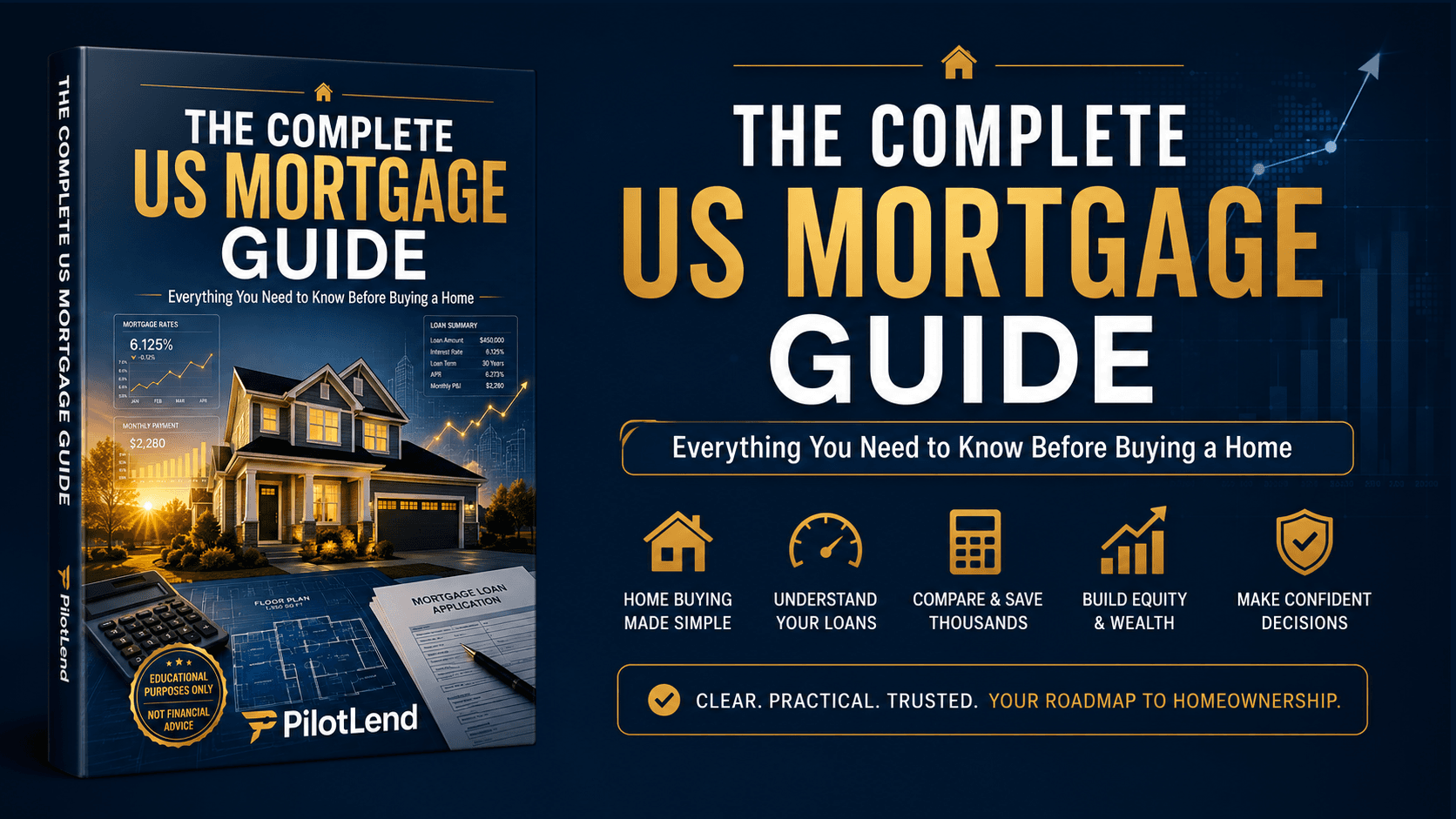
The Ultimate U.S. Mortgage Guide2026 Edition
Buying a home in the United States is one of the largest financial decisions you will ever make — and most buyers go into it underprepared.
They focus on the interest rate. They trust the first lender. They assume pre-approval means approval. They underestimate closing costs. They misunderstand mortgage insurance. And they leave thousands — sometimes tens of thousands — of dollars on the table.
This guide changes that.
Who This Book Is For
What You will Learn Inside
This is not a surface-level mortgage glossary. This is a strategic, numbers-driven playbook.
The First-Time Buyer Framework
- The psychology of affordability
- The 28/36 rule vs lender DTI limits
- Renting vs buying analysis
- Market timing myths
- Student loan impact on mortgage qualification
U.S. Mortgage Fundamentals Explained Clearly
- How mortgages really work (amortization, PITI, escrow)
- Conventional vs FHA vs VA vs USDA loans
- How interest rates are determined
- Fixed vs Adjustable Rate Mortgages (ARM strategy)
- Down payment strategies (3%, 5%, 20%)
- Loan Estimates decoded
The Self-Employed Mortgage Playbook
- How lenders calculate self-employed income
- Schedule C, K-1, W-2 vs distributions
- The S-Corp strategy
- Bank statement loans (Non-QM)
- DSCR loans for investors
- ITIN mortgage options
The Underwriting Process — Step by Step
- Automated vs manual underwriting
- The 4 C's: Credit, Capacity, Capital, Collateral
- Condition sheets explained
- Appraisal risk
- How to avoid red flags
Hidden Costs of Homeownership
- Closing cost breakdown (2–5%)
- PMI vs MIP explained
- HOA financial risks
- Property tax reassessment
- Inspection strategy
- Predatory lending warning signs
Long-Term Mortgage Strategy
- Refinancing break-even analysis
- 30-year vs 15-year comparison
- Extra payment strategy
- Recasting vs refinancing
- HELOCs and second mortgages
- Bankruptcy recovery timeline
Why This Guide Is Different
Most mortgage books either oversimplify the process, avoid hard numbers, ignore self-employed complexity, or push a specific lender agenda.
This guide is different. It is structured around transparency, real underwriting standards, practical financial math, risk management, and long-term wealth strategy.
You will understand not just what to do — but why.
Bonus Resources
One wrong mortgage decision can cost $20,000–$80,000 over 30 years. This guide costs less than 0.1% of that risk.
One-time purchase
$49.95